 EN
EN
Pautan Pantas

Laman Utama > Berita > blog
Dalam usaha tanpa henti untuk memperkecil saiz di pelbagai industri—mulai dari prob perubatan berketumpatan tinggi hingga kabel AR/VR generasi seterusnya—jurutera semakin bergantung pada konduktor ultra-halus seperti kabel koaksial mikro AWG 50. Dengan diameter luar sekitar 0.025 inci (0.635 mm), kabel-kabel ini membolehkan pengurangan faktor bentuk yang luar biasa. Namun, pengoperasian pada frekuensi yang lebih tinggi melalui julat yang begitu kecil menimbulkan cabaran fizikal unik, terutamanya kehilangan isyarat. Memahami prinsip fizik yang menyebabkan kehilangan ini adalah penting untuk memanfaatkan sepenuhnya kabel-kabel tersebut dalam aplikasi sensitif seperti kabel ICE, IVUS, dan kabel imej oral.
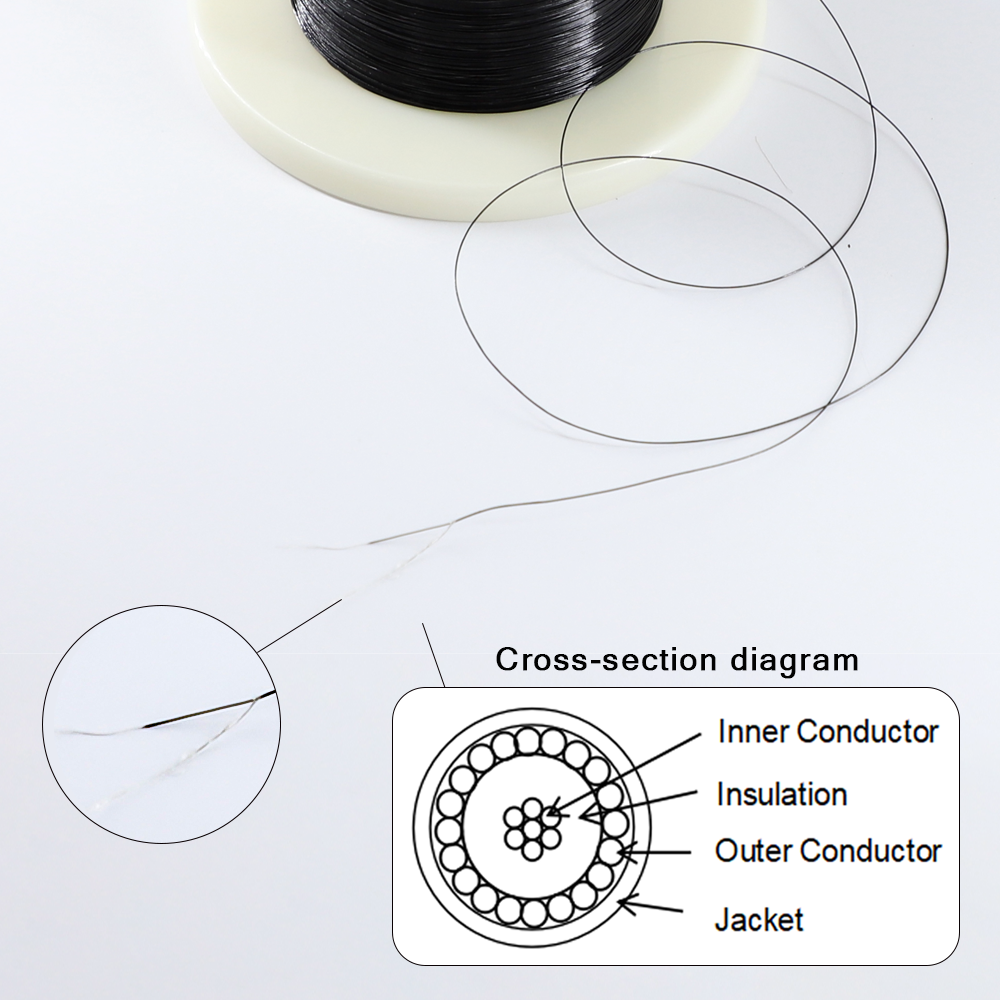
Kehilangan Konduktor dalam Kabel Koaksial Mikro AWG 50 pada Frekuensi Rendah
Sumber utama kehilangan dalam sebarang bentuk kabel koaksial ialah kehilangan konduktor, yang disebabkan oleh kesan lapisan kulit (skin layer). Apabila frekuensi isyarat meningkat, aliran arus terhad kepada lapisan "kulit" yang nipis di permukaan konduktor. Ketebalan kulit (δ) berkadar songsang dengan punca kuasa dua frekuensi dan ketelapan konduktor. Bagi kabel AWG 50, keratan rentas konduktor yang kecil memberikan sekatan ketara: rintangan frekuensi tinggi pada konduktor sekecil ini terutamanya lebih tinggi kerana luas permukaan yang tersedia untuk pengaliran arus adalah sangat kecil. Ini menyebabkan kehilangan Ohmik (I²R) yang ketara, di mana tenaga elektrik ditukar kepada haba. Dalam aplikasi seperti Harness Wayar Drone Padat atau malah Harness Wayar Robotik, di mana operasi kabel mungkin bersifat sementara, namun ruang pakej adalah sangat terhad, pengurusan pemanasan konduktif ini adalah penting untuk mengelakkan penurunan prestasi.
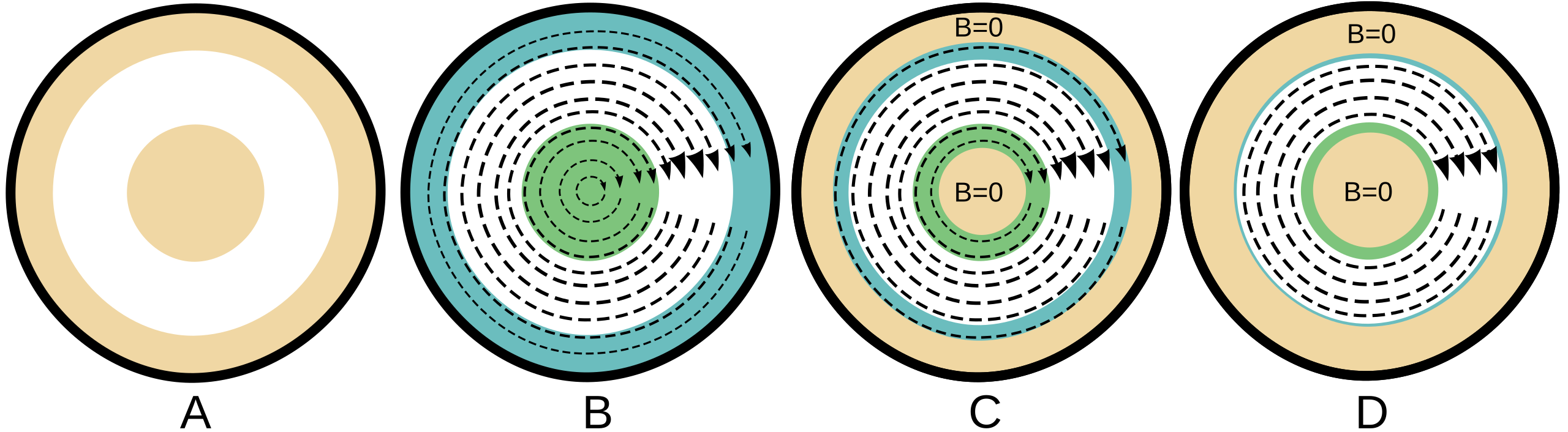
Kehilangan Dielektrik dalam Kabel Koaksial Mikro AWG 50 pada Frekuensi Tinggi
Walaupun kehilangan konduktor dikawal pada frekuensi yang lebih rendah, kehilangan dielektrik menjadi semakin ketara apabila frekuensi meningkat ke julat multi-gigahertz. Kehilangan ini berlaku dalam bahan penebat (dielektrik) yang memisahkan konduktor kuasa daripada pelindung. Apabila medan elektrik ulang-alik dikenakan, molekul berkutub dalam bahan dielektrik terus-menerus menyelaraskan semula orientasinya, menghasilkan geseran serta haba; inilah faktor disipasi (Df). Kabel ultra-halus memerlukan dielektrik ultra-nipis, yang kerap membawa maksud kompromi bahan. Memilih dielektrik dengan faktor disipasi yang rendah (seperti PTFE yang dikembangkan) adalah wajib untuk mengekalkan kestabilan isyarat dalam aplikasi berlebar jalur tinggi seperti Harness Kabel USB4 dan Harness Kabel LVDS untuk skrin perubatan beresolusi tinggi.
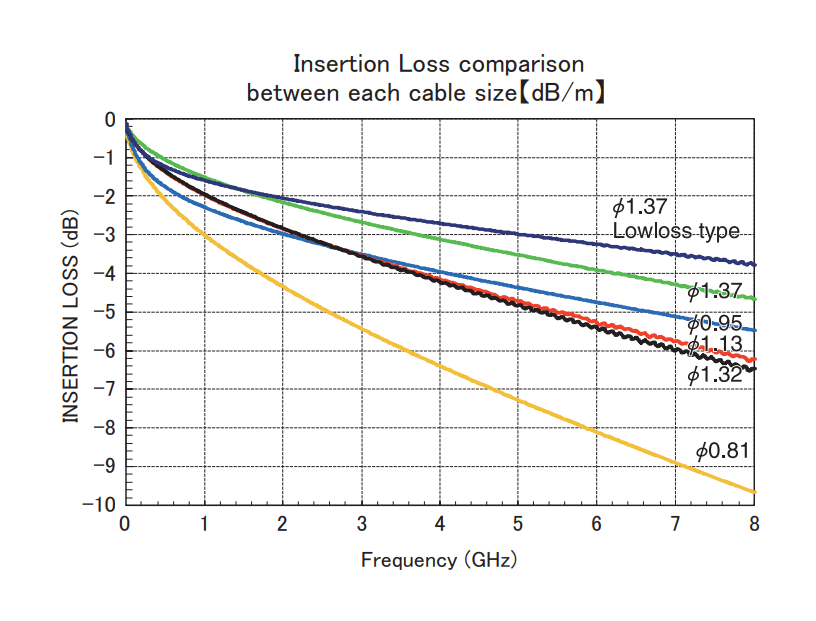
Kehilangan Pulangan Struktur dan Ketidakselarasan Impedans dalam Kabel Koaksial Mikro Ultra-Halus
Kehilangan isyarat bukan sahaja disebabkan oleh pelembutan, tetapi juga oleh pantulan isyarat. Kerugian Pulangan Struktur (SRL) dicetuskan oleh ketidaksempurnaan halus dalam geometri kabel, variasi saiz dielektrik, eksentrisiti konduktor utama, atau bahkan ketidaksekataan dalam anyaman pelindung. Dalam kabel AWG 50, di mana toleransi ditentukan dalam mikron, sebarang bentuk penyimpangan akan mencetuskan ketidakseketaran impedans. Ketidakseketaran ini menyebabkan sebahagian isyarat dipantulkan kembali ke sumber, secara berkesan mengurangkan kuasa isyarat yang dihantar serta mencetuskan ralat maklumat atau bahkan artefak imej. Ini terutamanya penting bagi kabel prob ultrasonografi dan kabel endoskop, di mana integriti isyarat RF analog secara langsung berkaitan dengan ketajaman imej serta keyakinan diagnosis.
Pengurangan Melalui Kejuruteraan Ketepatan dan Sains Bahan
Mengatasi sekatan fizikal ini memerlukan pendekatan rekabentuk alternatif:
Bahan-bahan Lanjutan: Menggunakan konduktor tembaga berlapis perak berketulenan tinggi memaksimumkan kekonduksian permukaan. Menggunakan dielektrik berketumpatan rendah dan ber-Df rendah mengurangkan kehilangan polarisasi.
Pembuatan dengan kejituan: Mengekalkan toleransi pada tahap mikrometer dalam proses ekstrusi serta pengkabelan menjamin keseragaman geometri, mengawal rintangan, dan mengurangkan SRL. Ketepatan ini menjadi asas dalam pembuatan kabel koaksial RF dan sambungan kabel koaksial mikro kami.
Reka bentuk yang dioptimumkan: Memahami jalur frekuensi aplikasi membolehkan penyesuaian reka bentuk secara khusus. Sebagai contoh, harness wayar kamera gimbal mungkin memberi tumpuan kepada dielektrik yang fleksibel dan berkehilangan rendah untuk pergerakan berulang, manakala kabel ablasi RF perlu menyeimbangkan kehilangan isyarat yang sangat rendah bersama keupayaan penghantaran kuasa yang tinggi.
Bagi pengilang kelengkapan asal (OEM) yang mendorong had inovasi, pilihan kabel koaksial ultra-halus merupakan suatu keseimbangan antara prinsip fizik serta kecekapan. Di Hotten Electronic Wire Technology, pasukan kami mereka kabel koaksial mikro AWG 50 bukan sekadar untuk memenuhi sekatan dimensi, tetapi juga secara proaktif mengatasi cabaran asas kehilangan isyarat. Melalui pemahaman mendalam tentang interaksi geometri konduktor, sifat dielektrik, serta ketepatan struktur, pasukan kami menyediakan kabel yang menjamin penghantaran isyarat yang boleh dipercayai dan berketepatan tinggi untuk salah satu aplikasi klinis, pengguna, dan komersial yang paling maju.
 Berita Terkini
2025-12-17
2025-12-11
2025-12-05
2025-04-29