 EN
EN
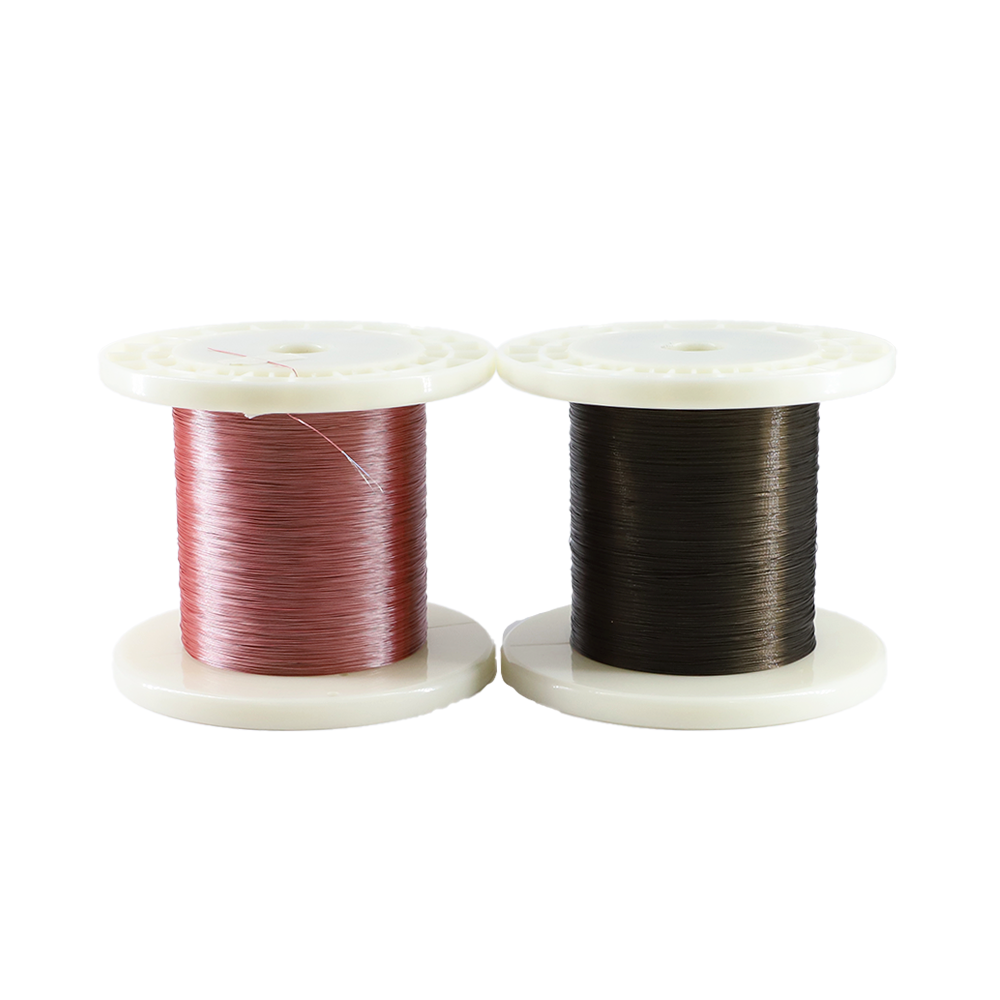
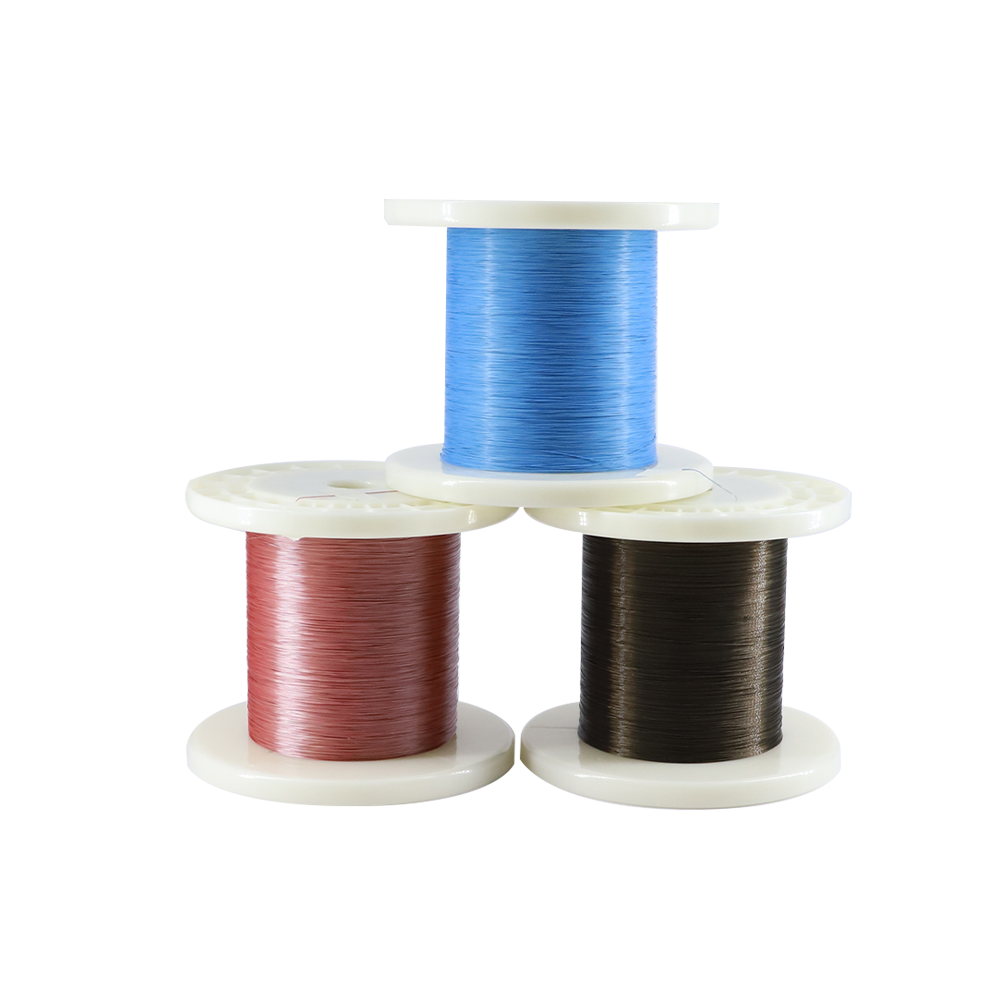
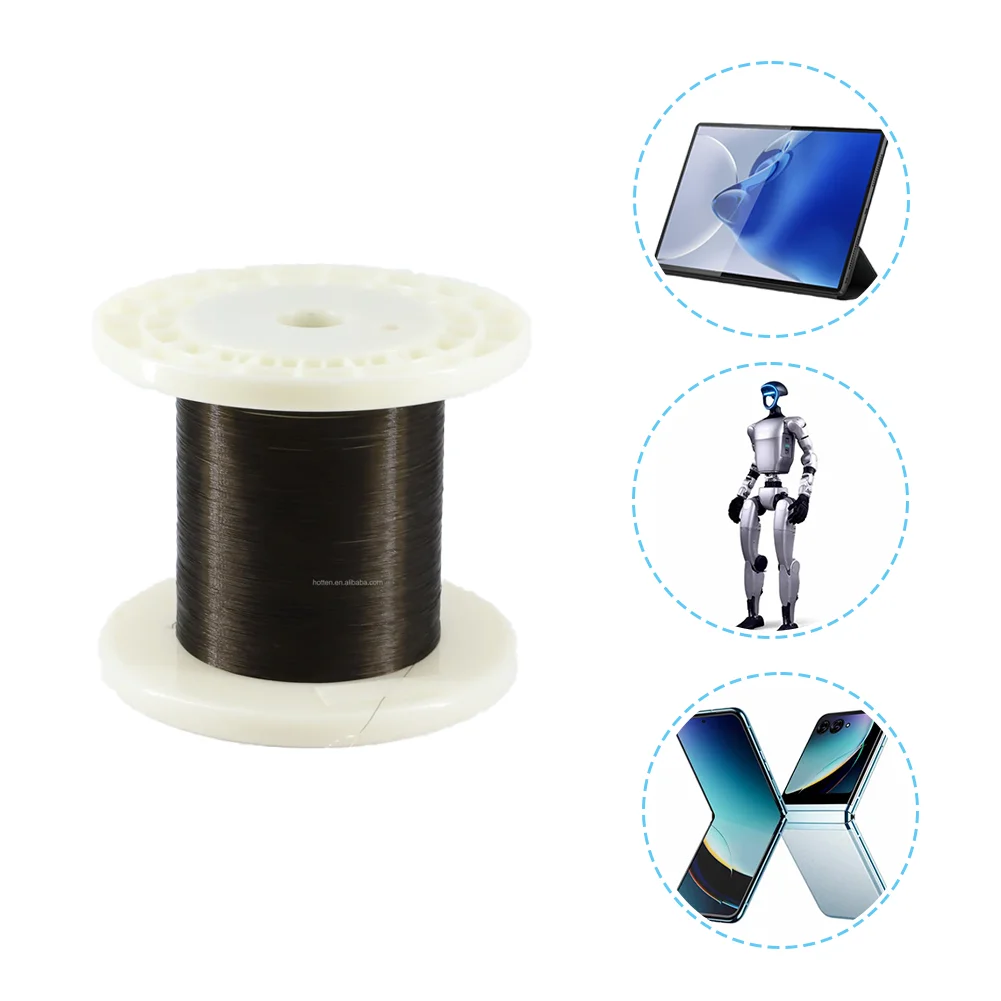
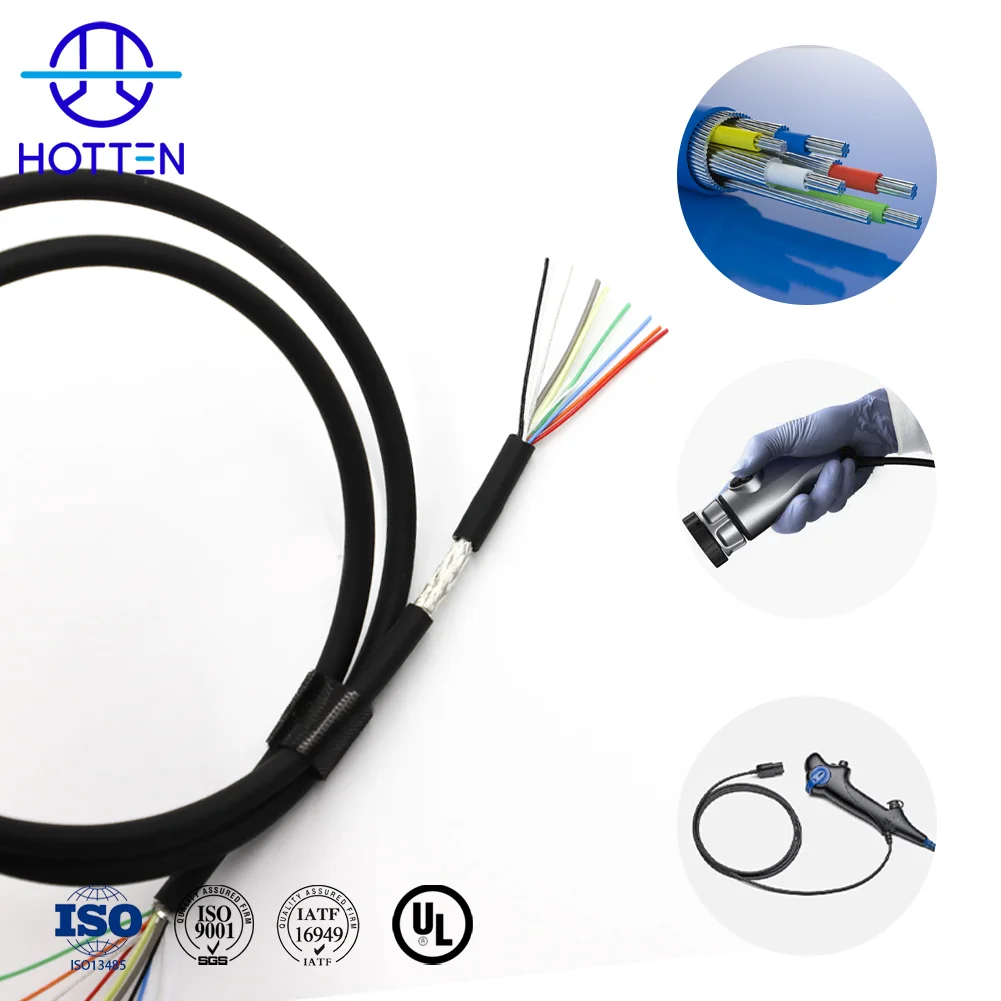
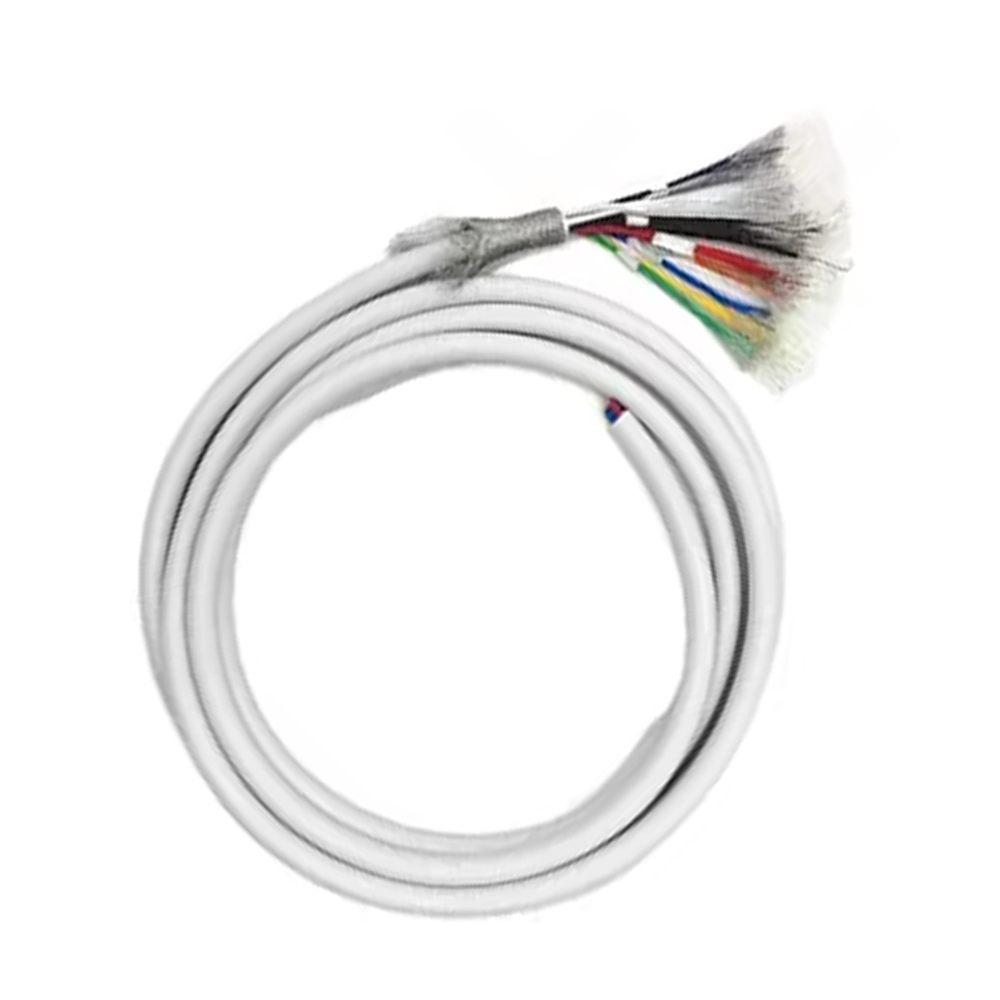
MCC 42.5Ω 42AWG(PET)High Temperature Micro Coaxial LVDS Cable for Electronics Automotive & Medical
|
Item
|
Value
|
|
Model Number
|
32AWG-50AWG Coaxial Cable
|
|
Type
|
COAXIAL
|
|
Place of Origin
|
Jiangsu,China
|
|
Brand Name
|
Hotten Cable
|
|
Conductors
|
Silver Plated Copper (Alloy)
|
|
Insulation
|
PFA
|
|
Jacket
|
PFA
|
|
Outer Diameter
|
0.15mm-0.5mm
|
|
Characteristic Impedance(at 10MHz)
|
50Ω(42.5Ω 、45Ω 、75Ω)
|
|
Temperature Range
|
-55~+200
|
|
Rating voltage
|
30V
|
|
Customize
|
Supported
|
- Overview
- Recommended Products
- Silver plated copper alloy
- Silver plated copper
- PFA
- FEP
- PET
- Silver plated copper shielding
- Tinned copper shielding
- PET
- PFA
- FEP
- Customized materials
Target impedance
Impedance tolerance
Measurement method
Test conditions
Operating frequency, where applicable
Cable length
Connector configuration
Conductor material
Plating
AWG
Stranding structure
Insulation
Electrical requirements
Flexibility requirements
Dielectric characteristics
Insulation thickness
Cable dimensions
Flexibility
Mechanical protection
Temperature environment
Compatibility with the shielding structure
Continuous operating temperature
Peak temperature
Exposure duration
Static or dynamic operation at temperature
Connector temperature requirements
Mechanical movement at temperature
Required lifetime or service conditions
Differential-pair configuration
Characteristic impedance
Conductor geometry
Dielectric structure
Shielding
Cable length
Connector termination
Pin assignment
PCB interface
Internal cable routing
Shield material
Shield coverage
Grounding configuration
Shield termination
Connector-side shield continuity
Required EMI performance
Target OD
Maximum allowable OD
OD tolerance
Minimum bending radius
Routing clearance
Connector entry dimensions
Strain relief
Static or dynamic bending requirements
Minimum bending radius
Repeated flex cycles, where applicable
Static or dynamic use
Routing path
Connector exit direction
Strain-relief requirements
High-speed electronic equipment
Compact electronic modules
Medical electronic systems
Imaging-related electronics
High-density signal interconnects
Connector manufacturer
Series
Part number
Contact count
Pitch
Pin assignment
Connector orientation
Mating interface
Termination method
Strain relief
AWG
Conductor material
Impedance
PET construction
Shielding
Cable diameter
Cable length
Connector
Pin assignment
Termination
Flexibility requirements
Prototype samples
Mass-production configuration
LVDS interface specification
42.5Ω target impedance and tolerance
42AWG conductor requirement
Conductor material
PET construction requirement
Temperature profile
Target cable OD
OD tolerance
Shielding requirement
Cable length
Flexibility / bending requirement
Connector part number
Pinout
Termination drawing
Application environment
Prototype quantity
Expected production volume
Required testing
Product Overview
42AWG Micro Coaxial LVDS Cable for High Speed Signal Transmission
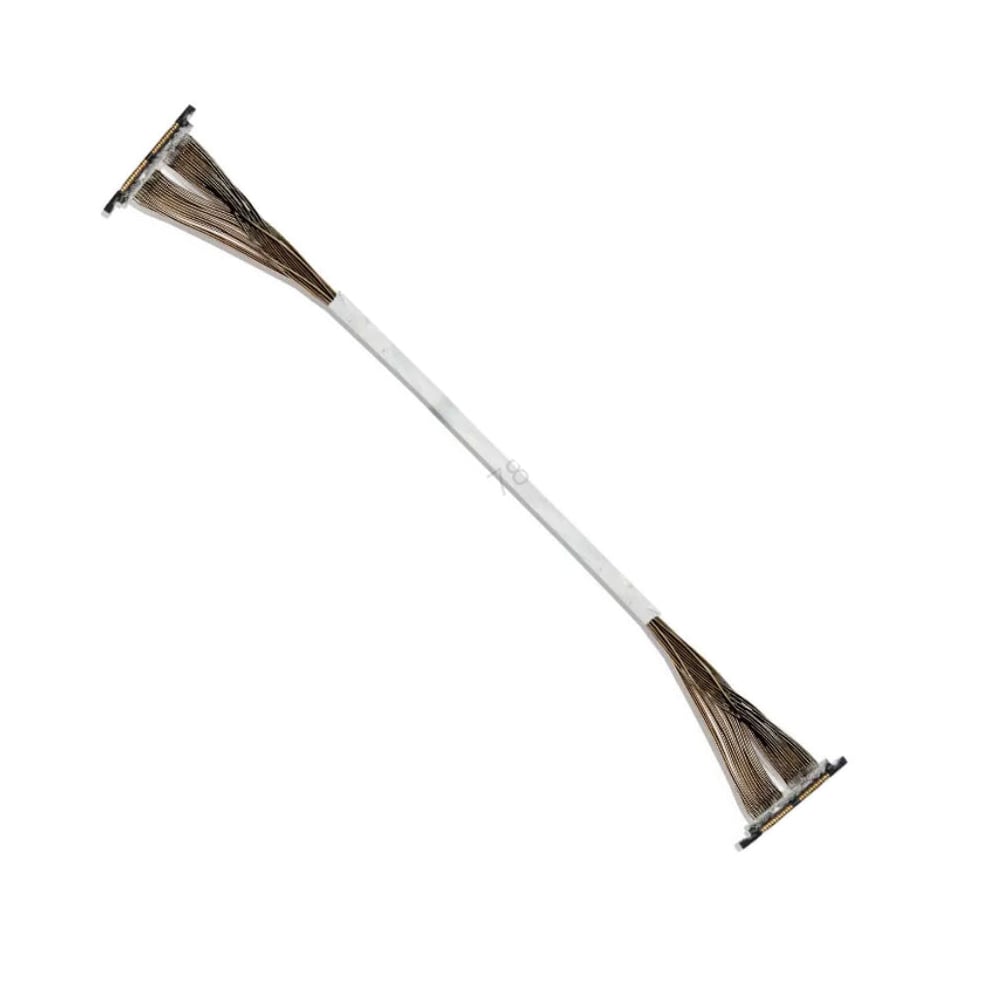
HOTTEN 42AWG Micro Coaxial LVDS Cable is designed for compact electronic systems requiring reliable high-speed signal transmission, controlled impedance and flexible cable structures.
Featuring a 42.5Ω characteristic impedance, PET sheath and ultra-fine conductor design, this cable provides stable electrical performance and excellent flexibility for high-density electronic applications.
The cable supports customized solutions including conductor materials, impedance requirements, shielding structures, outer diameter and connector assembly according to customer requirements.
Key Features
High Density LVDS Micro Coaxial Solution
🔹 42AWG ultra-fine conductor
🔹 42.5Ω controlled impedance
🔹 PET outer sheath structure
🔹 High-speed LVDS signal transmission
🔹 Excellent flexibility and bending resistance
🔹 Low signal loss performance
🔹 EMI shielding capability
🔹 Customized specifications available
Cable Structure
Precision Micro Coaxial Construction
Inner Conductor
Options:
Insulation Layer
Options:
Shielding Layer
Options:
Outer Sheath
Options:
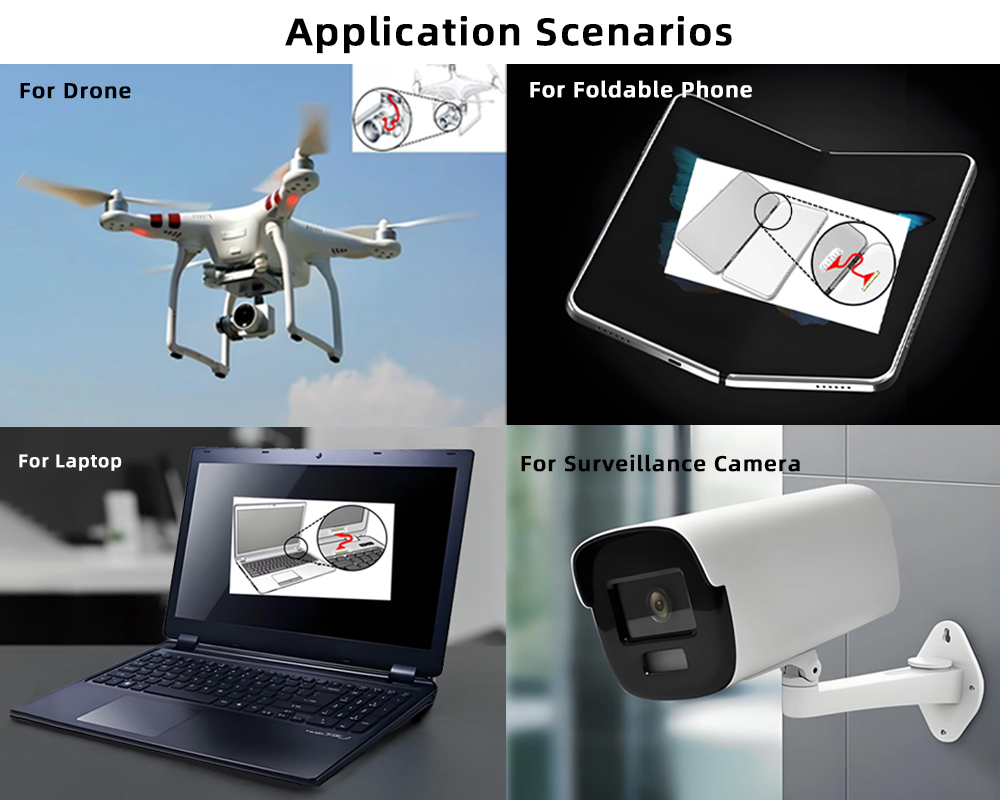
Applications
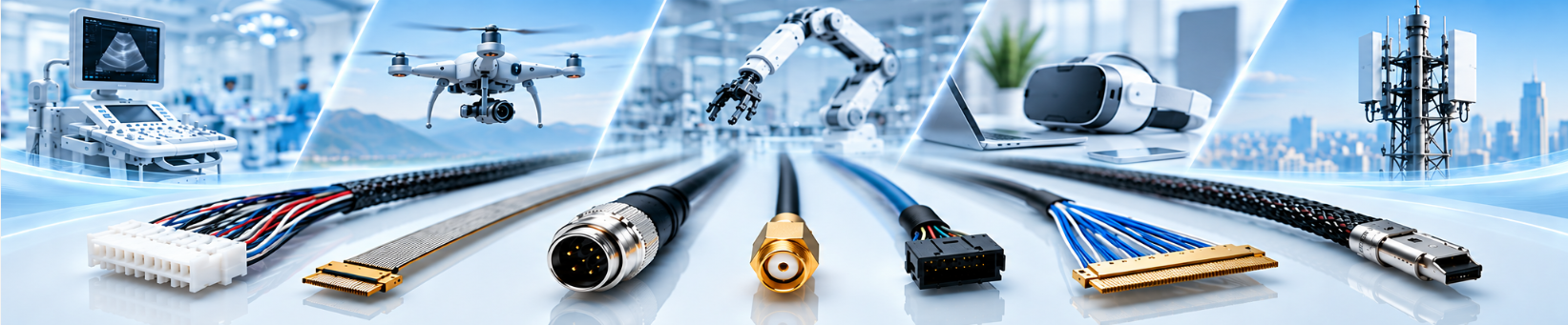
Precision Electronic Applications
Suitable for:
💻 Laptop Display Systems
📱 Tablet Devices
🚁 UAV / Drone Equipment
📷 Camera Modules
🚗 Automotive Electronic Systems
📡 Communication Devices
Customization Options
HOTTEN provides customized Micro Coaxial Cable solutions:
✔ AWG Size
✔ Impedance
✔ Outer Diameter
✔ Conductor Material
✔ Shielding Structure
✔ Jacket Material
✔ Connector Assembly
✔ Cable Length

Engineering & Procurement Considerations
What Engineers Should Consider When Selecting a 42.5Ω 42AWG Micro Coaxial LVDS Cable
A micro coaxial LVDS cable provides a compact interconnect for high-speed differential signal transmission in electronic and medical systems. This MCC configuration combines 42.5Ω characteristic impedance, 42AWG fine-gauge conductors, PET construction and high-temperature requirements, making impedance control, compact routing and material selection important engineering considerations.
For OEM applications, the cable should be evaluated as a complete signal path, including conductor geometry, dielectric structure, shielding, cable length, connector termination and mechanical routing.
Published Product Configuration
| Item | Specification |
|---|---|
| Product Type | Micro Coaxial LVDS Cable |
| Series / Model | MCC |
| Characteristic Impedance | 42.5Ω |
| Conductor Size | 42AWG |
| Conductor | Customized according to specification |
| Insulation / Outer Material | PET |
| Cable Construction | Micro Coaxial |
| Temperature Requirement | High-Temperature Application |
| Signal Application | LVDS / High-Speed Differential Transmission |
| Cable Diameter | Customized |
| Cable Length | Customized |
| Connector / Termination | Customized |
| Application | Electronics / Medical |
Key Engineering Requirements
| Engineering Requirement | Key Considerations |
|---|---|
| 42.5Ω Impedance | Cable construction should match the target system impedance and specified tolerance. |
| 42AWG Fine-Gauge Construction | Fine-gauge conductors support compact and high-density cable routing. |
| LVDS Transmission | Differential-pair construction and cable geometry should be matched to the required LVDS interface. |
| Micro Coaxial Structure | Individual coaxial signal paths can help provide controlled signal transmission and shielding. |
| PET Construction | PET material selection should be evaluated for dielectric, dimensional and mechanical requirements. |
| High-Temperature Capability | The complete cable structure should be evaluated against the actual operating temperature profile. |
| EMI Control | Shielding should be matched to the signal sensitivity and electromagnetic environment. |
| Compact Routing | Cable OD and connector dimensions should fit the available installation space. |
| Production Consistency | Impedance, conductor dimensions, OD and termination quality should remain consistent across batches. |
42.5Ω Impedance Considerations
The 42.5Ω characteristic impedance is the primary electrical entity for this product.
When specifying the cable, customers should define:
Impedance is influenced by:
Conductor Geometry + Dielectric Structure + Shielding + Cable Construction
Therefore, the cable and connector should be evaluated together where the assembly is used in a high-speed transmission path.
42AWG Conductor Considerations
The 42AWG fine-gauge configuration supports compact cable construction.
Procurement teams should confirm:
Fine-gauge processing should be evaluated together with the cable OD, shielding and mechanical routing requirements.
PET Construction Considerations
PET is an important product-specific material entity for this configuration.
Engineers should evaluate:
The final PET construction should be validated against the complete cable geometry because dielectric characteristics can influence impedance.
High-Temperature Application Considerations
For high-temperature LVDS applications, the complete cable construction should be evaluated rather than assuming high-temperature capability from a single material.
Customers should provide:
The conductor, insulation, shielding, PET construction and connector should all be considered when determining suitability for the target environment.
LVDS Signal Integrity Considerations
For LVDS applications, engineers should evaluate:
The final electrical requirements should come from the customer's LVDS interface specification.
Shielding and EMI Control
Micro coaxial construction provides a shielded signal path around the conductor.
The customer should define:
For compact high-speed applications, shielding should be considered together with impedance and termination to maintain the intended signal path.
Cable Diameter and Mechanical Routing
For fine-gauge micro coaxial LVDS applications, cable OD is an important mechanical parameter.
Customers should specify:
A compact cable must still maintain the required electrical geometry and mechanical reliability.
Flexibility Considerations
Depending on the target electronic or medical device, the cable may need to accommodate repeated bending or constrained routing.
Engineering teams should define:
The required flexibility should be evaluated together with PET construction, shielding and fine-gauge conductor processing.
Typical Application Considerations
This 42.5Ω 42AWG PET micro coaxial LVDS cable can be considered for applications requiring a combination of:
High-Speed LVDS + Controlled Impedance + Fine-Gauge Construction + Compact Routing
Potential application areas include:
The final cable construction should be selected according to the actual system specification.
Connector and Termination Considerations
For high-speed LVDS cable assemblies, connector design is part of the overall transmission path.
Customers should provide:
The connector should be evaluated together with the 42.5Ω cable to ensure the finished assembly meets the intended interface requirements.
Key Procurement Parameters
When sourcing a 42.5Ω 42AWG PET micro coaxial LVDS cable, procurement teams should confirm:
| Procurement Item | Recommended Information |
|---|---|
| Product Type | Micro Coaxial LVDS Cable |
| Series | MCC |
| Impedance | 42.5Ω |
| Conductor Size | 42AWG |
| Conductor Material | Required material / plating |
| Dielectric / Material | PET |
| Cable Structure | Micro Coaxial |
| Temperature | Continuous / peak operating temperature |
| Shielding | Shield material and structure |
| Cable Diameter | Target / maximum allowable OD |
| OD Tolerance | Required tolerance |
| Cable Length | Finished cable length |
| Flexibility | Bending / routing requirements |
| Connector | Manufacturer / model / part number |
| Pinout | Differential pair / contact assignment |
| Termination | Required termination method |
| Drawing | Cable / assembly drawing |
| Prototype Quantity | Engineering samples |
| Production Volume | Expected recurring quantity |
| Testing | Impedance, signal, electrical and dimensional requirements |
OEM Customization
HOTTEN supports customized micro coaxial LVDS cable development according to customer requirements.
Customization may include:
For OEM projects, the cable should be designed around the customer's LVDS interface, temperature requirements and mechanical architecture.
Supplier Evaluation Checklist
When evaluating a 42.5Ω 42AWG micro coaxial LVDS supplier, procurement teams should consider:
① Impedance-Control Capability
Can the supplier consistently manufacture and maintain the specified 42.5Ω impedance?
② Fine-Gauge Processing
Can the supplier reliably process 42AWG conductors?
③ Micro-Coaxial Manufacturing
Can the supplier maintain consistent coaxial geometry and shielding?
④ PET Construction Control
Can the supplier control the required PET dielectric structure and dimensions?
⑤ High-Temperature Capability
Can the supplier validate the complete cable construction for the customer's temperature environment?
⑥ High-Speed LVDS Capability
Can the supplier control signal-integrity requirements from cable construction through termination?
⑦ Prototype-to-Mass-Production Support
Can the supplier support engineering samples and recurring production?
Recommended RFQ Information
For faster engineering evaluation and quotation, customers should provide:
For this product, the most important RFQ combination is:
42.5Ω + 42AWG + PET + Temperature Requirement + Cable OD + Cable Length + Connector
HOTTEN Micro-Coaxial LVDS Engineering Support
HOTTEN provides customized micro coaxial LVDS cable solutions for compact electronic and medical applications. This product configuration is defined by 42.5Ω characteristic impedance, 42AWG fine-gauge construction, PET material and high-temperature application requirements.
For OEM projects, customers can provide the LVDS specification, cable drawing, temperature profile, connector information and dimensional requirements for engineering evaluation and customized production.
Why Choose HOTTEN
Professional Micro Coaxial Cable Manufacturer
Ultra Fine Cable Manufacturing
HOTTEN specializes in precision micro coaxial cables for high-density electronic applications.
Flexible Engineering Support
Cable structures can be customized according to electrical, mechanical and environmental requirements.
Reliable Quality Control
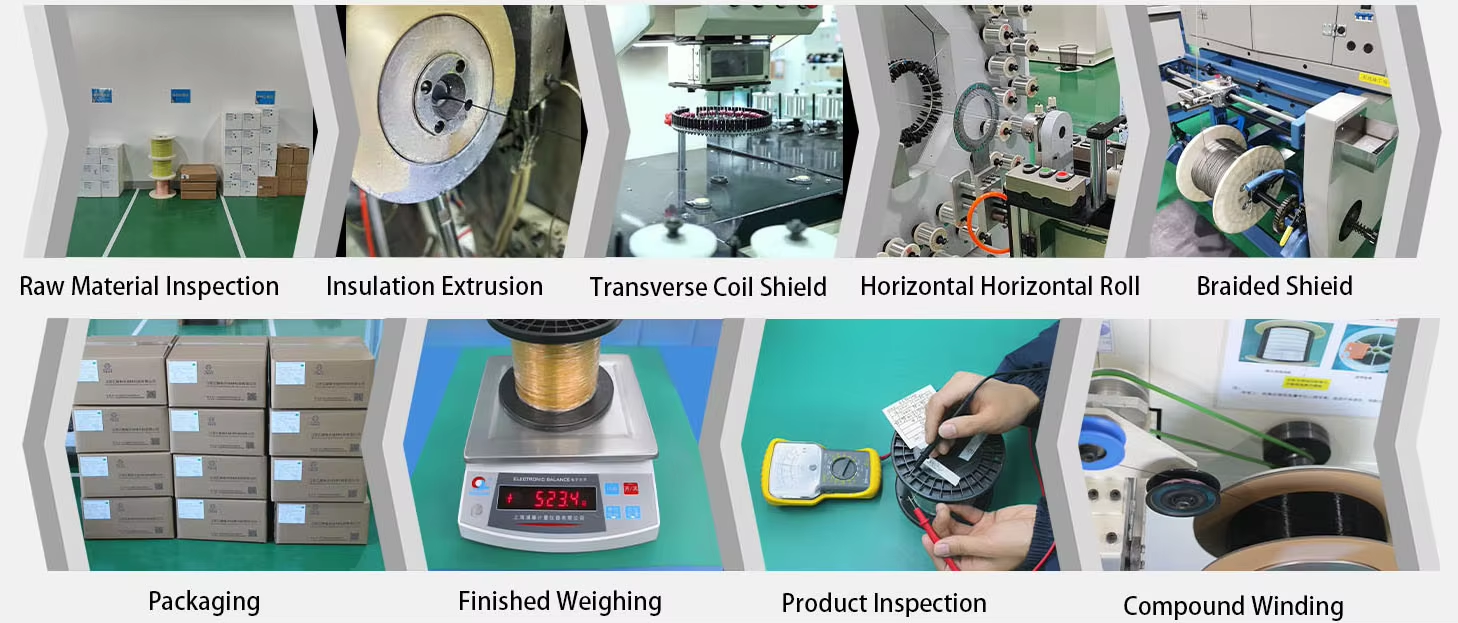
Professional testing equipment ensures stable impedance, insulation performance and production consistency.
FAQ
Q1: What is a 42AWG micro coaxial cable used for?
42AWG micro coaxial cables are widely used in compact electronic devices, displays, cameras, drones and medical equipment requiring high-speed signal transmission.
Q2: What is the advantage of PET sheath?
PET sheath provides a lightweight structure, good mechanical protection and flexibility for compact cable applications.
Q3: Can HOTTEN customize impedance values?
Yes. HOTTEN supports customized impedance designs including 42.5Ω, 45Ω, 50Ω and other requirements.
Q4: Can this cable be used for LVDS applications?
Yes. This type of micro coaxial cable is suitable for LVDS and other high-speed signal transmission applications.